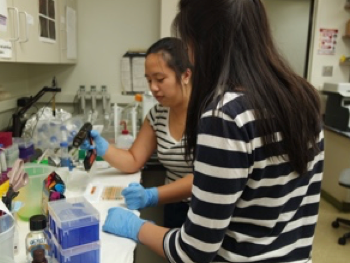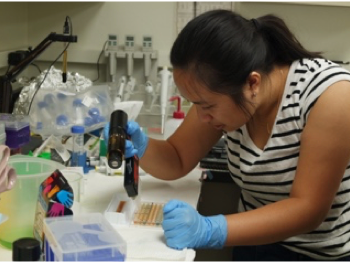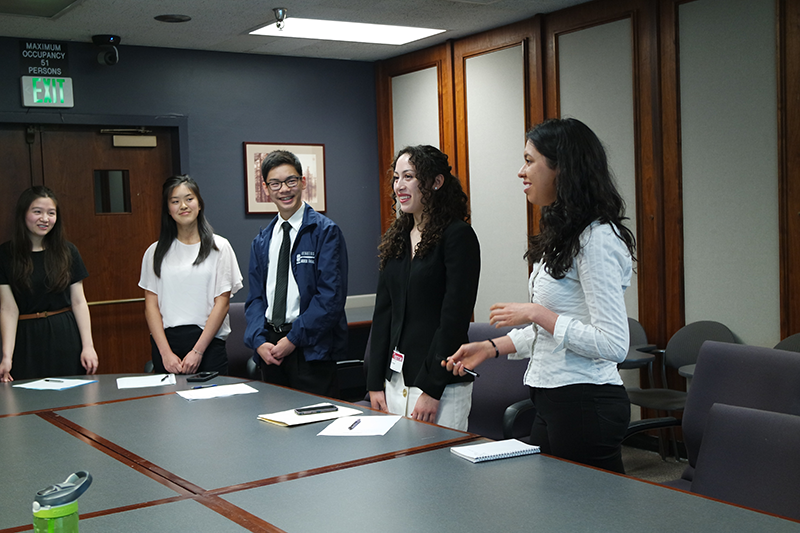
In 2017 we were honored to serve 11 extraordinary high school students from Arcadia, Gabrielino and Alhambra high schools in our summer research program. These students were paired with individual science academics at the USC Health Sciences Campus, where they joined research lab teams as assistants. Conducting research in fields as diverse as human anatomy and stroke prevention, they were given firsthand exposure to the world of science research and academia. Low-income and leadership stipends were provided to more than half of the students in the program to enhance the accessibility of this program.
In an age where many science undergraduates may graduate without ever setting foot in a science laboratory, these talented high school students were able to gain a quality experience as science researchers.
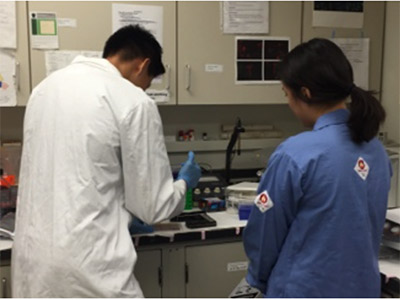
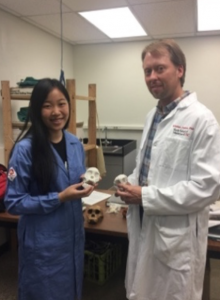 With a delighted face Sara Maung exclaims how she has learned so much in the few weeks since she has begun working with Dr. Kristian Carlson. As a specialist in biomechanics and human anatomy, Carlson connects the study of ancient fossils to our modern day understanding of how the human body functions and develops. Carlson reflects on the delight he gains from seeing how motivated Celine and Sara are in performing the tasks assigned to them. They quickly became core members of his lab and now produce material that help Carlson advance his own research.
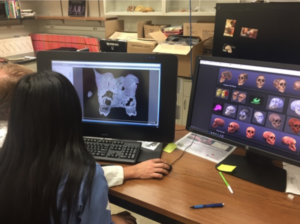 Carlson is now co-publishing a paper with one of the students, and is enthusiastic about writing them both letters of recommendation. Celine Cheng from Alhambra High School expressed that she finds this to be a great experience in developing her understanding of why she has been working so hard in school.
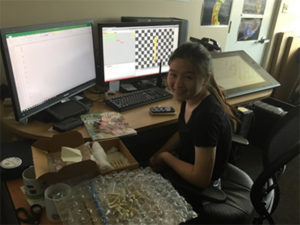 As an avid computer programmer before she joined CII, Isabella Lau from Gabrielino had no difficulty transitioning into researching with Professor Tea Jashashvili. Working in the Molecular Data Imaging Lab, Isabella has learned how to use numerous programs such as VG studio and other 3D modeling program to assist in research. These programs are used to analyze bones and view cross section of bones. Bianca Lee from Gabrielino has spent her afternoons assisting Jashashvili on a separate project that includes running CT scans, analyzing bones and observing coworkers performing ultrasounds on mice. For her part, Jashashvili has noted how she been inspired to see how hard Bianca and Isabella are working. She is committed not only to mentoring them inside the classroom, but has also decided to teach Isabella how to cook in the department kitchen. She is also planning on taking both Isabella and Bianca on a field trip to the La Brea Tar Pits Museum. This is an example of how an internship at CII can become a very personal experience that extends far outside of the laboratory.